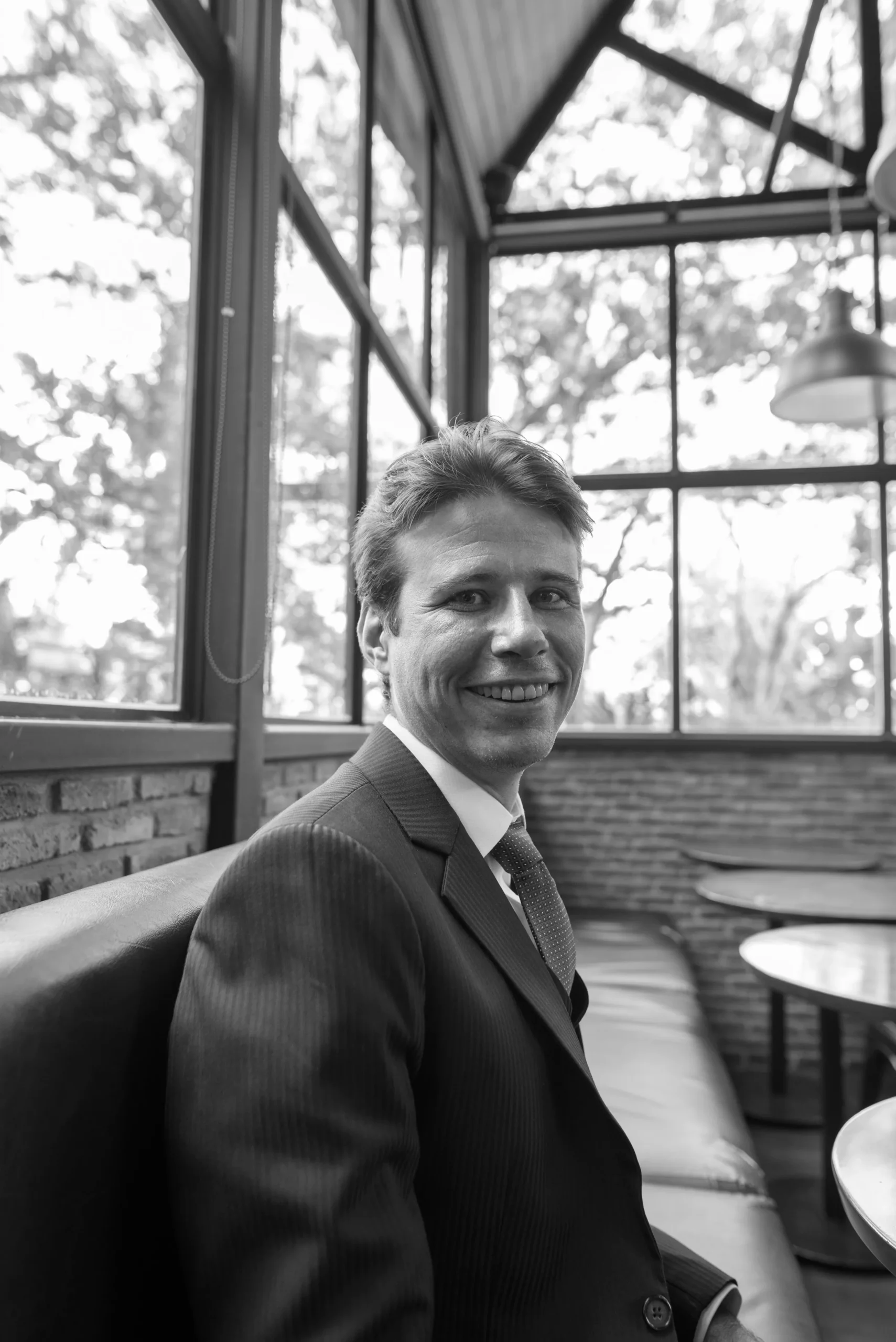
When you walk into the Athens office of Ribezzi Group, you are not greeted by the things you might expect. There are no televisions tuned to market channels. No glass-walled trading floors. No motivational quotations etched into the lobby walls. Instead, the visitor is led through a quiet corridor of dark wood and soft light, past a small library of well-read books, into an office that feels more like a private study than a corporate boardroom.
This is, in many ways, a deliberate choice.
“We are not in the business of urgency,” [Founder Name] says, settling into a leather armchair across from his desk. “Urgency is a very expensive emotion. It causes you to do things you would not otherwise do, at prices you would not otherwise pay. The most valuable thing a long-term investor can cultivate is the discipline to slow down.”
[Founder Name] founded Ribezzi Group more than two decades ago, beginning with a single hospitality business in central Athens. Today, the group operates across four sectors — Real Estate, Retail and Food & Beverage, Consultancy, and Commodities — with more than two dozen portfolio companies and a presence in twelve countries. He has, throughout that time, given very few interviews. This is, by his own admission, the first extended profile he has agreed to in nearly a decade.
“We measure success in decades, not quarters.”
The phrase, which has become something of an internal mantra at Ribezzi, captures the group’s defining principle: an explicit rejection of quarterly thinking in favour of generational ownership. It is a principle that, on paper, sounds simple. In practice, it has proven extraordinarily difficult for most investors to maintain.
“It is easy to say you are long-term when markets are stable,” [Founder Name] notes. “It is much harder when markets are punishing you for not chasing the latest thing. The test of patience is not whether you can hold for ten years. It is whether you can hold for ten years while everyone around you is loudly disagreeing with you.”
He cites a number of acquisitions Ribezzi has held for fifteen, eighteen, and in one case more than twenty years — many of which faced significant short-term pressure during their tenure under group ownership. In each case, the businesses are now significantly stronger than they were at acquisition.
“Time is the most underused tool in modern investing,” he says. “Most investors talk about it. Very few are actually willing to wait.”
On the four sectors
Ribezzi’s diversification across Real Estate, F&B, Consultancy, and Commodities is, at first glance, unusual. Most modern holding groups specialise. Few operate meaningfully across more than two unrelated sectors. Yet for [Founder Name], the breadth is not a hedge — it is a philosophy.
“Every sector teaches you something the others cannot,” he explains. “Real estate teaches you about permanence — about what it means to build something that physically endures. Hospitality teaches you about craft and human experience. Consultancy teaches you about intellectual rigour. Commodities teaches you about flow and global movement. Together, they form a more complete education in how the world actually works.”
He resists the suggestion that the group is structured as a diversified hedge against any one sector’s downturn.
“We are not diversified for protection. We are diversified for understanding. The more sectors you operate across, the more clearly you see how value is actually created — and the harder it becomes to be fooled by a single market’s narrative.”
On partnership
Throughout the interview, [Founder Name] returns frequently to one theme: the role of founders, families, and operating partners in Ribezzi’s businesses.
“We do not buy companies to replace the people who built them,” he says. “We buy companies because of the people who built them. When we acquire a business, we are acquiring a culture, a craft, a relationship with a community. Those things are not transferable. Our job is to make sure they continue.”
This philosophy has shaped Ribezzi’s acquisition process in unusual ways. The group’s average due diligence period is more than a year. Founders are typically retained in advisory or stewardship roles long after a transaction closes. And, in some cases, Ribezzi has walked away from acquisitions where the founder was unwilling to remain involved — regardless of how financially attractive the business was.
“If the people leave, the thing we wanted to buy leaves with them,” [Founder Name] observes. “There is no version of this business where we hand a target a cheque and assume operations continue unchanged. That is not how human enterprise works.”
Looking ahead
Asked about Ribezzi’s plans for the next decade, [Founder Name] is characteristically measured.
“We will grow, but selectively. We will continue to invest in Southern Europe, North Africa, and parts of Asia. We will hold what we already own with the same patience we always have. And, I hope, we will pass an even stronger group on to the next generation than we inherited.”
He pauses, looking out the window of his study.
“That is the real measure,” he says. “Not what you build. What you leave.”